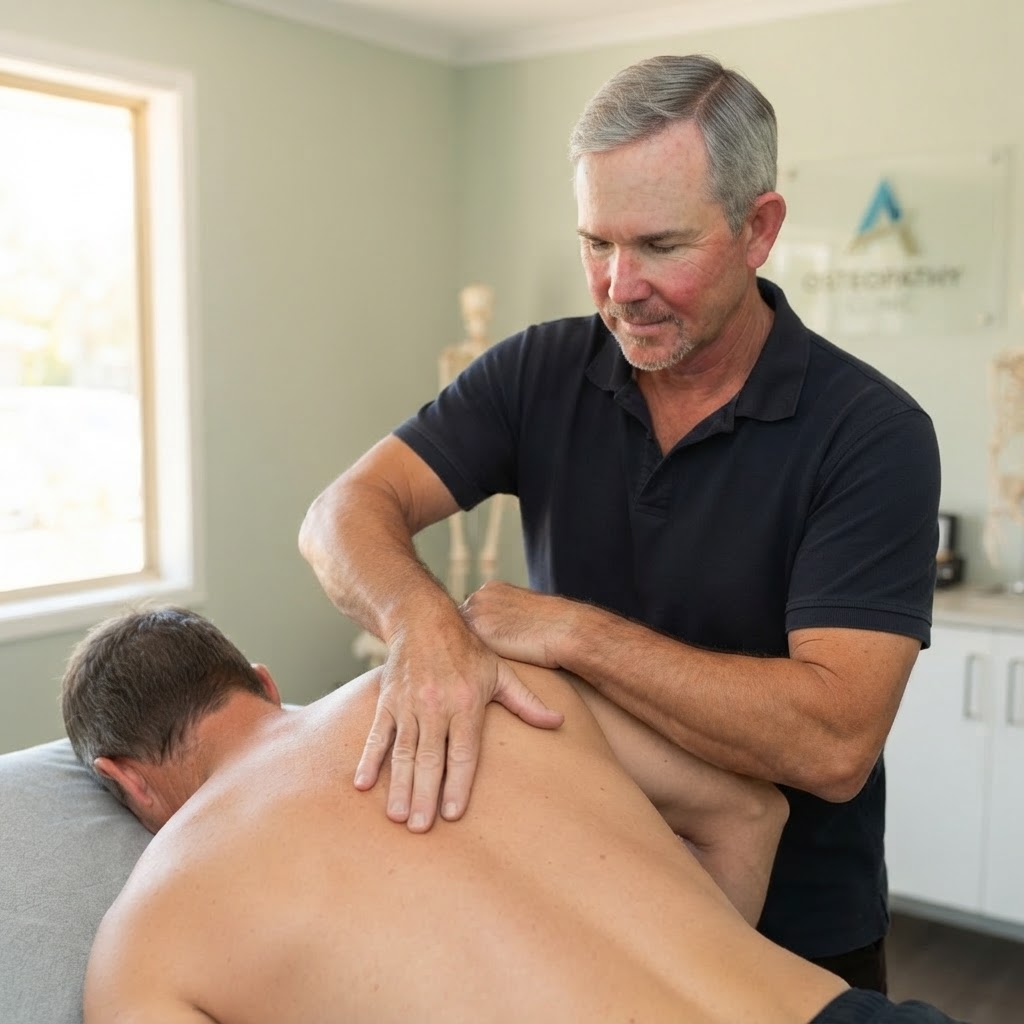
Shoulder pain can make everyday activities difficult, from lifting groceries to sleeping comfortably. At Northside Osteopathy in Aspley, we help you recover from shoulder injuries and stiffness using hands-on techniques that improve movement, reduce inflammation, and prevent pain from returning.
What Causes Shoulder Pain?
Shoulder pain can develop from overuse, muscle imbalance, poor posture, or direct injury. Common conditions include rotator cuff strain, impingement, frozen shoulder, bursitis, and referred pain from the neck or upper back. Our osteopaths identify the source of pain through a detailed assessment.
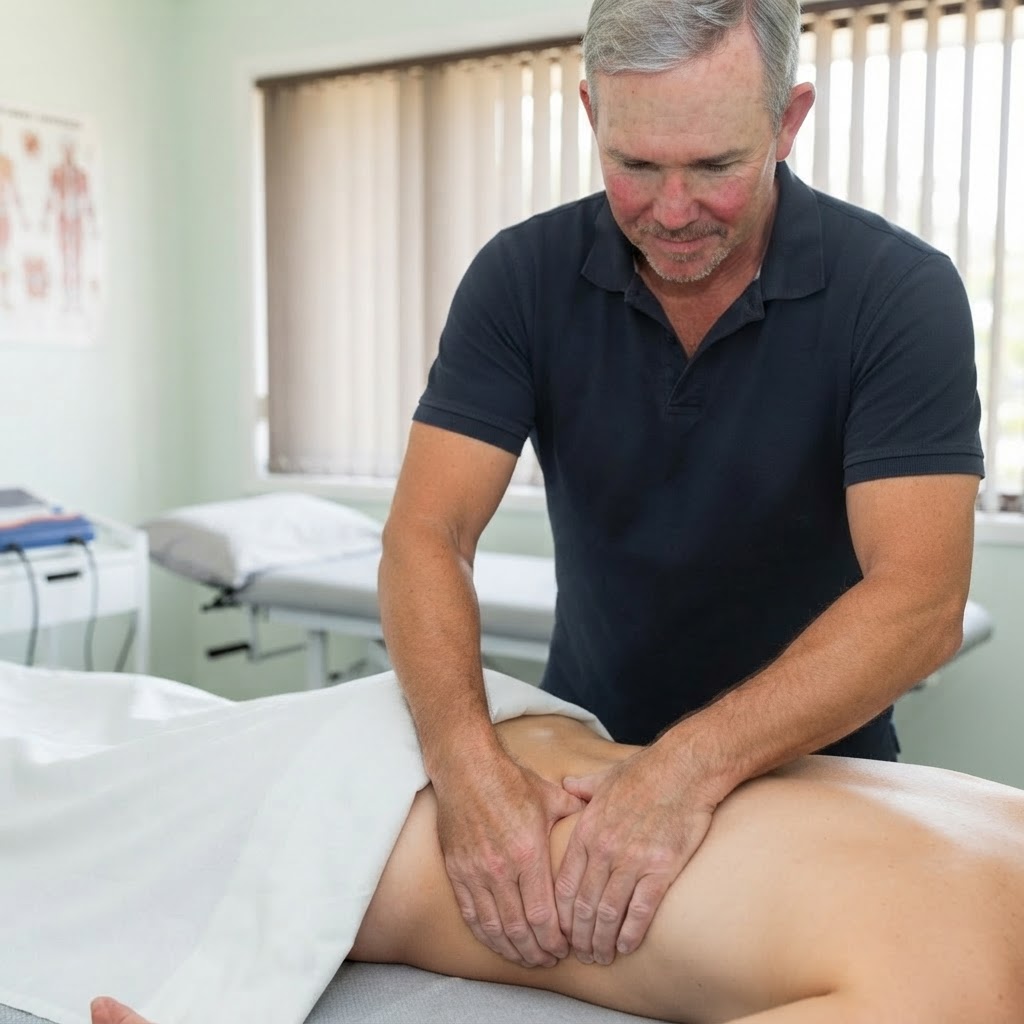
How Osteopathy Can Help
Osteopathic treatment restores mobility and function by reducing muscle tension and improving joint alignment. Your session may include:
- Soft tissue massage to ease tightness and inflammation
- Gentle joint mobilisation for pain-free movement
- Muscle Energy Techniques (MET) to balance muscle strength
- Strain-Counterstrain for protective or tender areas
- Exercise programs to strengthen and stabilise the shoulder
- Postural and ergonomic advice to reduce future strain
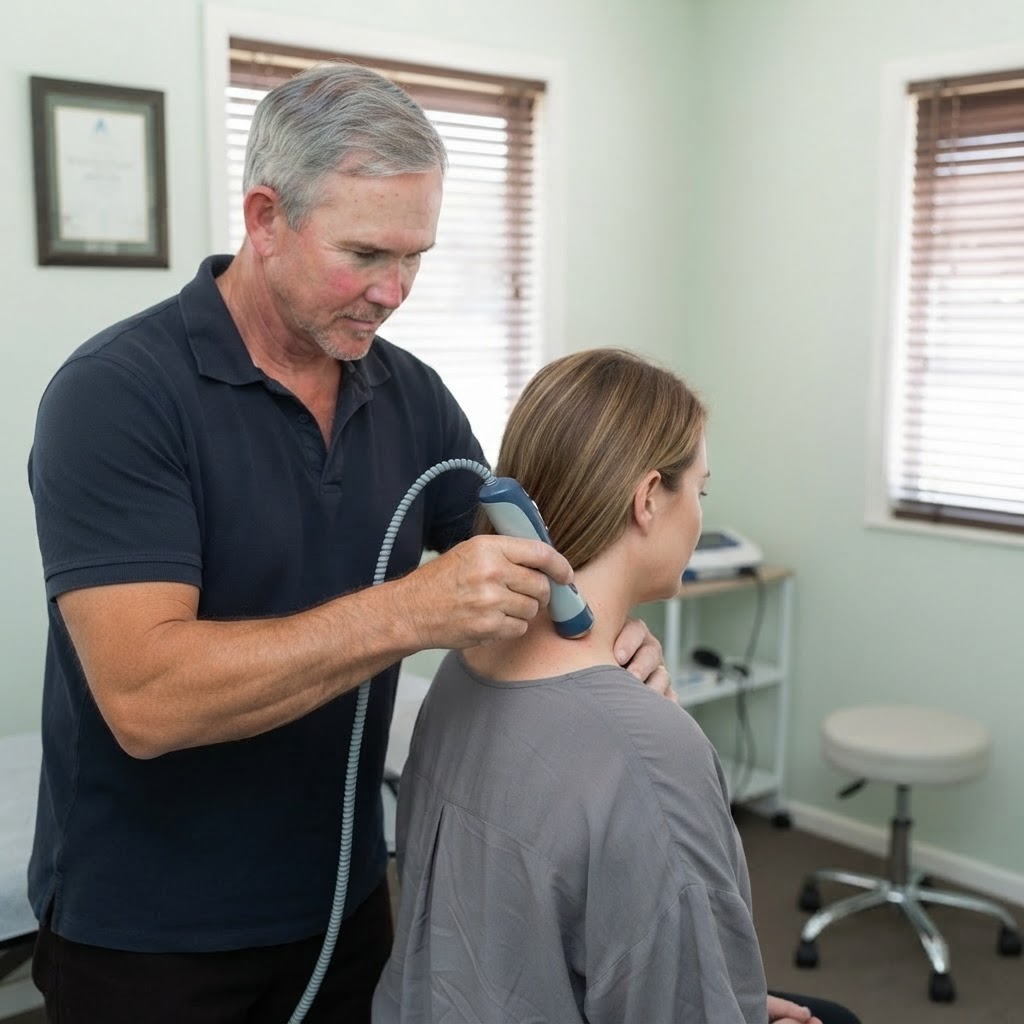
Advanced Therapies for Shoulder Recovery
For persistent or sports-related shoulder pain, we may include advanced technologies:
- Radial Shockwave Therapy (RSW): stimulates tissue healing for rotator cuff or tendon injuries.
- MLS Laser Therapy: decreases inflammation and promotes faster recovery.
- Dry Needling: releases muscle tension and improves blood flow around injured areas.
Common Shoulder Conditions We Treat
We regularly help patients with:
- Rotator cuff injuries
- Shoulder impingement syndrome
- Frozen shoulder (adhesive capsulitis)
- Bursitis and tendon inflammation
- Postural shoulder pain
- Sports or gym-related injuries
What to Expect
Your first session includes:
A full discussion about your symptoms and activity levels.
A physical assessment of posture, joint movement, and muscle function.
An explanation of your diagnosis and treatment plan.
Gentle, hands-on therapy tailored to your comfort and goals.
Frequently Asked Questions